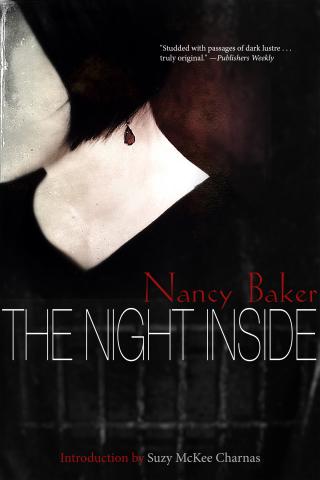
Not only can you ask me anything (or almost), if you RSVP now you have the chance to win the e-book collection.
RSVP now! (My old copywriting instincts are coming back…)
Not only can you ask me anything (or almost), if you RSVP now you have the chance to win the e-book collection.
RSVP now! (My old copywriting instincts are coming back…)
No Comments | Add a CommentPosted in Uncategorized
The big news – the entire first draft of Cold Hillside has now been finished and sent to my editor at ChiZine Publications. Now I’m just waiting for the rewrites to begin. It’s been a long (18 years long) road to get to this place and it feels a bit strange to think that I’ve actually managed to finish writing another book.
I’ve been fortunate enough to be able to do some interviews and articles for some fascinating websites to promote the e-book versions of the first three novels. I’m glad I’ve discovered all of them but I suspect my “to read” book list is about to get much, much longer.
There’s an interview at My Bookish Ways here.
I really enjoyed writing the background to “how I wrote the book” for The Night Inside for Upcoming4.me. It brought back a lot of memories of that time, including my habit of sitting on Harvey’s on Bloor Street on Sunday mornings, eating scrambled eggs and writing (by hand!).
On May 22nd, I’ll be doing an extended on-line chat (between noon and 8 p.m. or so) at Bitten By Books, so please come by and ask me anything. Well, maybe not anything.
No Comments | Add a CommentPosted in Uncategorized

A friendly desert community where the sun is hot, the moon is beautiful, and mysterious lights pass overhead while we all pretend to sleep. Welcome to Night Vale.
NOTE FROM NANCY: Because you may have noticed I’m not exactly … prolific … I have inveigled the talented and funny Toveen into writing a guest post for me. Enjoy!
Night Vale is a quaint little town in a quaint not-so-little desert. It can be found, yes, though not without some difficulty; merely listen for the whispers in a quiet room—those found beneath the silent buzz of an empty place when you mistakenly think you are alone–and you will find the directions eventually…unless, of course, the whispers find you first.
If you are a weak-willed mortal being built of sagging sacks of flesh and fluid like many of those reading this, however, it may be more prudent to simply locate the podcast. After all, listening to the news is almost like being there—and you listen to the news, don’t you? Well, even if you don’t, you’ve never heard the news announced quite like this.
Welcome to Night Vale is a creation of Commonplace Books and is written by Joseph Fink. At least, that’s what they tell us. Can we say in any absolute terms that it is not the product of a failed alien experiment on the human mind-brain? No. Can we imply that is? We probably shouldn’t. But is it? Probably not. But maybe. (Probably not, though.)
Now, without further procrastination in an attempt to shield your soul from what is probably not a failed alien experiment on the human mind-brain: should you listen to Welcome to Night Vale?
1. Do you like horror?
WTNV is the podcast that reaches its slimy eldritch tentacles up from the relative safety of your headphones and wraps them around your mind like the slithering octopus of horror it hopefully isn’t. (Hopefully.) It pulls you into its thick embrace and threatens to welcome you as warmly as its title implies–which is actually not that warmly at all, and really more an action of indifference than anything else, but it welcomes you all the same.

“Come home,” Night Vale whispers. And you comply. God help you, you comply.
Night Vale seems to be a town pulled straight from the writings of Lovecraft–a beautiful desert Innsmouth where cats float at fixed points in space and where angels never, ever stop smiling. You ignore the angels, of course; angels do not exist, and you are not to know about them. If they were to exist, though–and they don’t–they would still never, ever stop smiling. It is the law. If nonexistent angels and levitating felines don’t interest you, perhaps the science will. Night Vale is a very scientifically interesting community. The most scientifically interesting community in all of America, actually! Cecil Gershwin Palmer, diligent radio host of WTNV, is very into science these days, you know. If you majored in science (no, not biology, or chemistry, or physics, or anything else—science. Just. Science.), this is the podcast for you! On the other hand, if science isn’t your thing, don’t worry! Your friendly neighbourhood Strex Corp will rid you of all your worries. Worry is only a temporary thing; everything is temporary, really, when you think about it. Even your precious, fragile life. Embrace the void that is soon to be your existence! It may one day return the favour.

StrexCorp Synergists Inc. Look around you: Strex. Look inside you: Strex. Go to sleep: Strex. Believe in a smiling God: Strex. StrexCorp Synergists Inc.
2. Do you like humour?
Do you like to laugh? Do you enjoy making mouth noises with your face orifices and scrunching motions with your eyes? Then you will like WTNV. Cecil can go from serious radio host to 90’s movie cheerleader at the drop of the archaic currency form of your choosing. Joseph Fink’s writing is witty and fun and peppered with the oddities only Night Vale and your deepest nightmares can provide. Can humour and horror blend? Yes. Should they? Probably not, but that doesn’t stop Night Vale! At any rate, when Cecil’s soothing tones tickle your cochlea, pedestrian thoughts will be the last thing on your mind. Cockroaches, maybe. Thoughts? No. Succumb to Night Vale’s intoxicating comedy and all will be well.*

Stand on your front porch and shout “NRA!” to order one today.
*All will probably not be well, but it’s still better than exploring the alternative.
3. Do you like equal representation?
Are you tired of the same old story? Boy meets girl? Girl rejects boy? Boy goes home to summon ancient spirits of his long dead ancestors in a fervent act of revenge? Boy confronts girl with ghostly legion? Girl remains unimpressed and proceeds to unhinge jaw, consuming boy and all things unholy he has wrought upon the world in an instant? Then WTNV is right for you! WTNV features a diverse cast of characters and just enough limitation on its descriptions that you can picture the characters however you want. Is Cecil black? Is he white? Is he an eight-foot-three shadow creature born of the night and stars and sea and sky? He’s whatever you want! Also, he’s gay. But really, when you think about it, aren’t we all? No. When you live in a town like Night Vale, however, it probably ranks on the scale of abnormality right above dirt. Is dirt abnormal? No. Unless you’re talking about the dirt in that little pile over there–that dirt is abnormal. You probably shouldn’t touch it. Members of the LGBTQ+ on the other hand? Perfectly normal, as they should be–or, at least, as close to normal as any of us can hope to get. (Which probably isn’t very.)
4. Do you like awesome things that are also free?
Do you love free things? Who doesn’t! No, don’t answer that. That was a trick question; the answer is StrexCorp. StrexCorp does not enjoy free things, and you owe them $14.00 just for considering it. Thankfully, you are probably not StrexCorp, and so you probably are also in the habit of enjoying free things. Well, you’re in luck! WTNV is free and it’s available on iTunes (among other sites) for download! How does the Night Vale team continue to put out such quality episodes without charging a literal arm and a leg? The answer is demonic possession. That, and donations. They also have a store where you can buy things to put on your body and in your home. Including spiders! Those aren’t for sale, though–they’re hidden in the merchandise. Surprise! WTNV also puts out quality recordings of their live shows at the end of every tour. You can buy these for one whole dollar an episode! (Or more, if you’re feeling generous.) Each of these recordings features a double length episode—double the minutes, double the terror! And fun. Mostly fun.
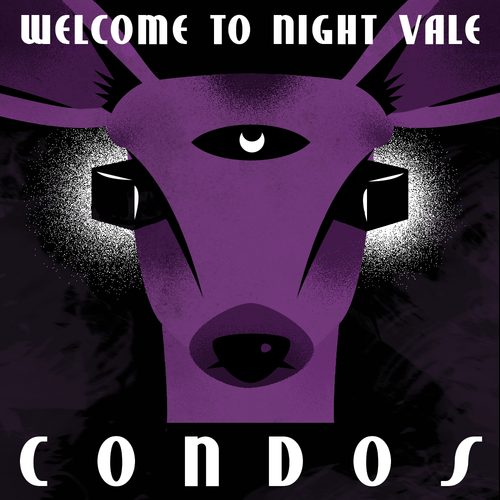
Night Vale condos: the real estate option tailored specifically, terrifically and horrifically for you!
5. Do you like dog parks?
If so, then, no. Welcome to Night Vale is not the podcast for you. Do not enter any dog parks. Don’t even look at any dog parks. If possible, do not think about dog parks. I understand it’s hard—“dog parks” has now been repeated five times in this paragraph already—but you really mustn’t. After all, you wouldn’t want to be committing a thought crime, would you? No, you wouldn’t. City Council would not approve, and it’s for everyone’s best interest that you stay in their favour. The good news is that this egregious misuse of your mind can be remedied by months of painful electroshock therapy, or else listening to Welcome to Night Vale. Wait, what? Yes, that’s right! The ailment is also the cure! Cecil will teach you how best to reprogram your mushy brain through use of fervent prayer, howling chants and bloodstone circles. Just tune in the 1st and 15th of every month for your dose of Night Vale and soon you, too, will forget that dog parks ever existed! Wow!

…what was I talking about again?
No Comments | Add a CommentPosted in Uncategorized
One of those Facebook things is making the rounds and since it’s on the topic of influences, it seemed an eminently suitable thing to repost. It’s not just that I’m lazy/busy. No indeed.
1. Fairy Tales
2. The Incredible Journey
3. Andre Norton
4. Peter O’Donnell
5. Tanith Lee
6. C.J. Cherryh
7. Shirley Jackson
8. Charlotte Bronte
9. Siouxsie And The Banshees
10. Kate Bush
11. Jane Austen
12. Patricia McKillip
13. David Keyes
14. Ruth Rendell
15. Robin McKinley
No Comments | Add a CommentPosted in Books · Influences · Music
All writers have them. They’re the words you default to when you’re working on your first draft and you don’t want to slow down to find le mot juste. They’re the ones you love the sound of or which have particular aesthetic and emotional associations in your subconscious. They’re the ones you just think are cool and sexy. They can be very useful in getting things down on paper (or, well, on your screen) without your pesky internal editor censoring.
But sooner or later comes the day when you have to wade into the morass of text and prune those little suckers out. (I’ve been doing Spring garden work, can you tell?)
My own pet words include “pale” and “dark”. My wonderful copy editor pointed out that in A Terrible Beauty I used the word “realized” over 100 times. I had to cut half of them out.
I’m at that stage in Cold Hillside and have spent over 5 hours going through all 400 pages (and thank the IT gods for “find and replace”) staring in despair at all the yellow highlights. Apparently I love adverbs and the words “merely”, “only”, “surely” and “chilly”. It’s never as easy as simply (another one!) as whacking them all. Dialogue has to be reviewed to see if it’s strong enough to convey the tone of voice. First person narration has to be considered: those words sometimes form part of the way the character thinks. Sometimes they add nuance or weight or just pleasing symmetry to a sentence.
I’ve probably cut over 500 words but there are many more still there. I’ll have another go at it, as will my editor, but sometimes it’s useful to remember that weeds have their place in the ecosystem.
I plan to confidently tell myself that such is surely the case, in those moments of dark misery at words that seem merely pale shadows of the richness I can imagine but can only dream of conveying through my chilly prose.
No Comments | Add a CommentPosted in Uncategorized
Ok, I admit it. I went to the Indigo and Amazon sites to see if the books are available for pre-order. Indeed they are. For some reason Blood and Chrysanthemums doesn’t appear in the main search, but it is there.
So head on over and order yours today.
No Comments | Add a CommentPosted in Uncategorized
Where do writers get our ideas, you ask? Sometimes, we get them from other writers.
There were many inspirations for my first novel, The Night Inside, but one of them was definitely a story by another writer. I read Suzy McKee Charnas’ wonderful collection The Vampire Tapestry, which features a vampire quite unlike most of the others I had encountered to that point. There’s nothing supernatural about Weyland and the book was a fascinating exploration of how an essentially alien creature adapts and survives in the human world. In one of the novellas, Weyland is taken prisoner by men intending to exploit his nature.
Something in that resonated with me and resurfaced later with the idea for a short story in which a vampire is displayed in a circus side show and runaway teens are kidnapped to feed him. The story never went anywhere but the essential situation (a captive vampire and an intended victim who form an alliance to escape) became a key part of The Night Inside.
In 2003, Robin McKinley (a writer I love) published Sunshine. At the beginning of the novel, the main character is captured by a gang of vampires and chained in a ballroom of a secluded mansion as temptation and torture to another vampire. Sunshine is completely different from The Night Inside but I admit it was a slightly surreal experience reading that section.
When Sandra Kasturi from ChiZine Publications told me she was going to approach Suzy McKee Charnas about writing an introduction for e-book reissues, I was thrilled and terrified. Charnas graciously agreed and her kind and witty introduction now graces The Night Inside and Blood and Chrysanthemums.
When you borrow, borrow from the best. So go read The Vampire Tapestry and Sunshine and anything else by either writer you can get your hands on.
E-BOOK UPDATE: The e-book editions will be available in mid-April through CZP, Amazon, Indigo and other e-book outlets.
No Comments | Add a CommentPosted in Books · Influences · News

We went to The Great Upheaval: Masterpieces from the Guggenheim show at the Art Gallery of Toronto yesterday afternoon. I like modern art, particularly abstract impressionism and related styles, and we’ve been to MOMA, the Pompidou in Paris, The National Gallery in Washington and museums in almost every city we’ve visited. We’re the people who dragged our families off the Ringling Museum of Art in Sarasota, because what else do you do in Florida but look at Baroque and Medieval art. We’d even been to the Guggenheim but, iconic as the building is, it’s not exactly well-endowed with space, so many of the key pieces weren’t on display.
The current exhibit focuses on the years between 1910 and 1918 and the artistic response to technology, social change and a long and terrible war. I’ve always been intrigued by the idea of setting a story inside one of the avant garde art movements of the 20th century but I’ve never been able to come up with a plot. Maybe someday.
Here are some of my favorite pieces from the exhibit
Helene with the Coloured Turban, Alexei Jawlensky
Despite my love of black and generally monochromatic wardrobe, there is a part of me that responds very strongly to colour. This exhibit is filled with it.

Blue Mountain, Vasily Kandinsky
This is just crying out to be a book cover for some wonderful, strange fairy tale.

Planes by Colour, Large Nude, Frankisek Kupka (image at top)
Years ago, a friend gave my husband a poster of this and we were very disappointed we didn’t see it at the Guggenheim. Now we’ve had a chance to see it and it’s gorgeous. It’s a bit big for our house, but we’d make it work.
The Red Tower, Giorgio de Chirico
Because you know there’s a story there.

Mountain Graveyard, Kurt Schwitters
Despite the fact that my brain kept humming Tonio K’s Merz Suite/Futt Futt Futt at every mention of Schwitters’ name, this painting was beautiful, moody and moving.

And then we went to Agave y Aguacate for excellent margaritas and tapas-style Mexican food. Art and food – not a bad way to end the day.
No Comments | Add a CommentPosted in Art

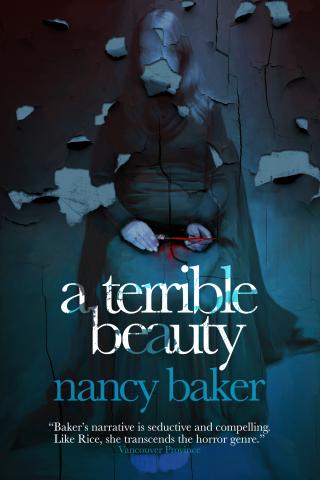
At last, some real news can be revealed.
In the first big news, the talented team at ChiZine Publications is bringing out my first three novels as e-books, complete with stunning new covers. A special thanks to Gillian Holmes for The Night Inside and Blood and Chrysanthemums. They’ll be released in a few weeks.
Secondly, I’ll be reading on February 19th as part of the Chi Reading Series in Toronto, along with the wonderful David Keyes and Liisa Ladouceur. I’ll be reading from one of the first three books, though I haven’t finalized that yet. Hope to see you there.
And, finally, ChiZine will be publishing my fourth novel, Cold Hillside, in the Fall of 2014.
No Comments | Add a CommentPosted in Books · Events · News

No question at all. Patricia McKillip. If I could figure out a way to magically steal every scrap of poetry, plot, inspiration, craft and beauty out of her soul, I’d do it. (Ok, maybe I wouldn’t do exactly that but I’d certainly be tempted…)
I read The Riddlemaster of Hed in high school, while I was working at the Markham Public Library. I reached the end of the book, boggled at the cliffhanger ending, and wanted the next book right away. I had to wait months for the Heir of Sea and Fire to come out but when I did, I loved it even more. I was in university when the last book, Harpist in the Wind, was published. I inhaled it in a huge gulp one day in my residence room and then promptly went back and read parts of it again, just for the sheer beauty of them.
Since then, I’ve read everything she’s written, most of them more than once (or twice, for that matter). Her books aren’t huge fantasy “doorstops” but there’s more richness of imagination in them than in many trilogies. Her world-building is exactly what you need to know and no more, a feat of which I am incredibly envious. Her language can be opaque at times, requiring attention to parse out the full meaning, but it is always beautiful. There’s an austere grace to her writing that hits every button in my reading/writing brain.
Read the following passage from The Cygnet and the Firebird and see what she can do with something as shop-worn and familiar as dragons:
“An eye had opened in the distant mountains: a second-sun, red-gold, flaming through the harsh, barren crags. A crag unfolded, extended itself upward in a broad sweep of gold. Another eye opened. The true sun rose above them. A second crag broke away, moved upward into the sky, to catch the wind. The dragon shrugged itself out of the mountain, soared upward, light sliding like molten gold across its bright scales….. It came straight to them: its vast shadow, flung forward, reached them first. It seemed, as the earth darkened beneath its broad underbelly, to have swallowed the sun. Then it veered, loosed the sun from beneath it’s wing. It settled on top of the steep ruin of stones near them. It stretched its wings the light: gold shook in their eyes. Then it faded into itself among the rocks, its brilliant, craggy profile to the light. One eye stared down at them, wide and ruthless as the sun.”
One of her books is called Something Rich and Strange. That’s a good a description of her own writing as any.
(Be sure to get the editions of her books, where possible, with cover art by Kinuko Craft. They’re absolutely exquisite.)
No Comments | Add a CommentPosted in Books · Influences